
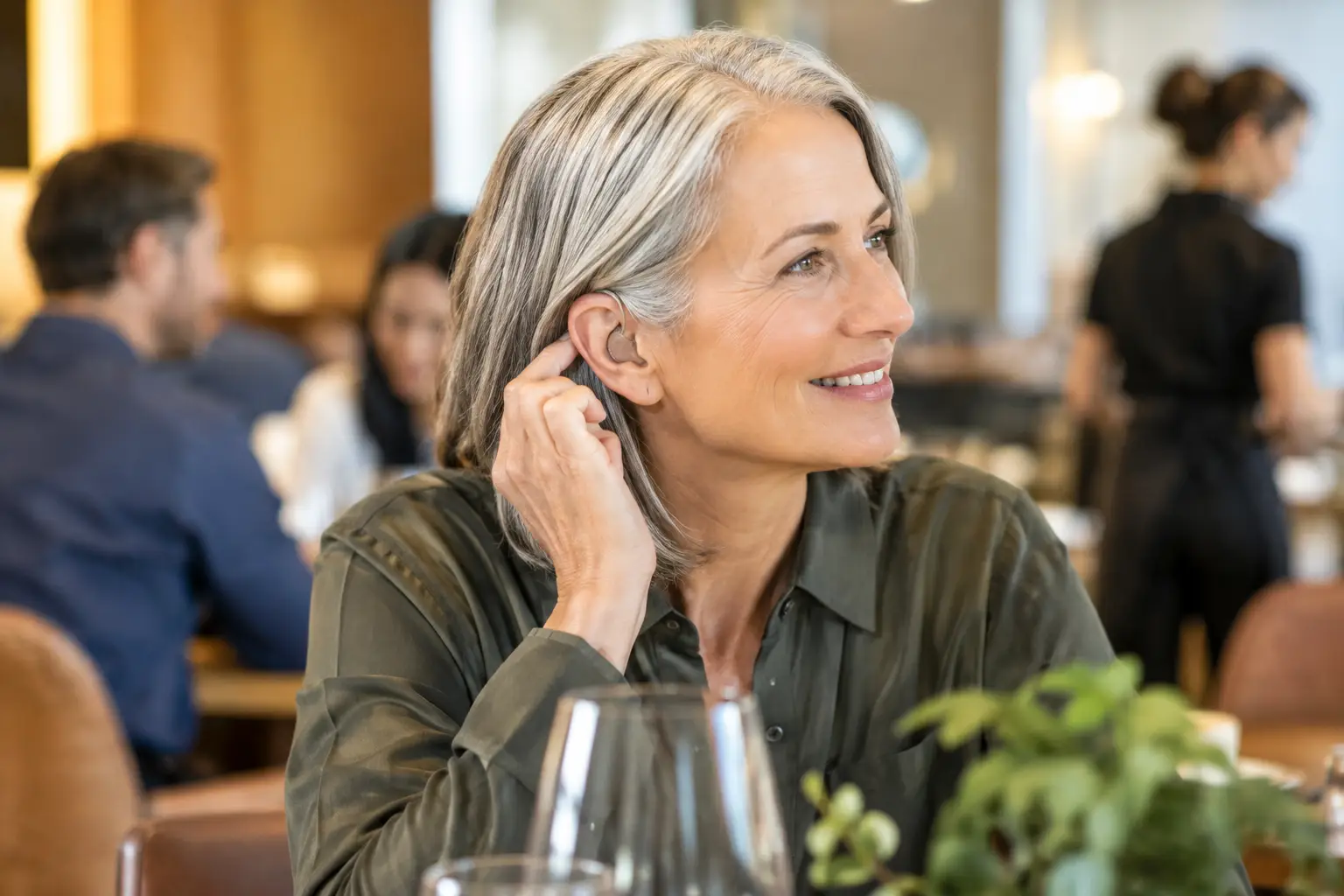
Hearing Aids for Noisy Restaurants That Help
A favorite restaurant should not leave you smiling, nodding, and hoping you answered correctly. Yet for many people with hearing loss, crowded dining rooms make conversation feel like work. The right hearing aids for noisy restaurants can reduce that strain, but success depends on more than buying the newest device. It depends on choosing technology that suits your hearing loss, your usual dining situations, and the way you actually live.
Restaurant noise is one of the most common reasons people decide it is time for help. You may hear a server clearly at the table, then lose the conversation as soon as music starts, dishes clatter, or a larger party sits nearby. That is not a personal failure. It is a difficult listening environment, even for people with normal hearing.
Why Restaurants Are So Hard to Hear In
Restaurants combine nearly every condition that challenges hearing: voices coming from multiple directions, hard surfaces that reflect sound, background music, kitchen noise, and conversations that change quickly. For someone with hearing loss, the brain receives less detail from speech, particularly consonant sounds such as sh, th, f and k. Those details help separate one voice from another.
Turning up the volume alone rarely solves the problem. In fact, it can make the experience worse by making every sound louder at once. A well-fitted hearing aid is designed to do more than amplify. It should help prioritize speech while keeping the room from becoming overwhelming.
That is why a hearing evaluation and personalized fitting matter. Two people may both say they struggle at restaurants, but one may need more help with high-pitched speech sounds while another may be especially sensitive to loud noise. Their best settings may be very different.
Features That Matter in Hearing Aids for Noisy Restaurants
Modern prescription hearing aids have made amazing progress with background noise. No device can erase a busy restaurant or make every word perfectly clear, but the right features can improve comfort, conversation, and confidence.
Directional microphones
Directional microphones are among the most valuable tools for restaurant listening. They are designed to focus more attention on speech in front of you while reducing some sound from behind and beside you. If you are seated across from a spouse, friend, or family member, this can make a noticeable difference.
Some devices adjust automatically as the listening environment changes. Others allow you to select a focused listening program through a button or smartphone app. The best option depends on how much control you want and how easily you can manage settings in the moment.
Speech-in-noise processing
Advanced hearing aids use processing designed to identify speech patterns and reduce competing background sound. The goal is not silence. A restaurant should still sound like a restaurant. The goal is to make voices clearer and reduce the effort required to follow them.
Results vary with the room. A quiet booth in a carpeted restaurant is much easier than a packed dining room with live music and tile floors. Honest expectations matter: better technology can improve a difficult situation, but it cannot change the laws of acoustics.
Automatic programs and personalized adjustments
Many current devices recognize common sound environments and shift settings automatically. That convenience is helpful, especially for first-time users. Still, automatic adjustments are not always perfect. A dedicated restaurant or speech-in-noise program may work better for someone who regularly meets friends for lunch or attends family dinners.
This is where follow-up care is valuable. If a device sounds too sharp, too loud, too muffled, or simply does not help enough in a favorite restaurant, adjustments can be made. Hearing aids are not one-size-fits-all products. They are personal communication tools that often need fine-tuning.
Bluetooth and discreet app control
Smartphone-connected hearing aids can give you simple control over volume, directional focus, and listening programs without handling the devices at the table. For some people, that is a practical advantage. Others prefer a device that runs automatically and requires little interaction.
The right choice is not always the one with the longest feature list. It is the one you can comfortably wear, confidently use, and rely on every day.
The Fitting Is as Important as the Technology
It is easy to compare hearing aids by brand name or price, but restaurant performance is strongly affected by how the devices are programmed and supported. A hearing aid that has excellent noise-management features can still disappoint if its settings do not match your hearing needs.
A professional fitting begins with understanding your hearing evaluation, but it should also include questions about your life. Do you enjoy weekly breakfast with friends? Do you attend church gatherings, card games, community events, or family celebrations? Are restaurant meals a major source of frustration, or an occasional challenge?
At Everybody HEARS, the focus is on matching top-brand technology to the situations that matter to you, then providing the education and follow-up care that help you get results. A free seven-day trial can also give you a meaningful chance to test hearing aids in real life, including the places that have been hardest to hear.
Do not judge new hearing aids after a few minutes in a quiet office. Wear them at home, talk with family, and visit a familiar restaurant. Notice whether you feel less tired after conversation, whether you ask for fewer repeats, and whether you participate more naturally. Those everyday results tell the real story.
Small Changes That Make a Big Difference at the Table
Even the best hearing aids benefit from smart listening strategies. When making a reservation, ask for a quieter table away from the kitchen, bar, speakers, or entrance. Booths, corner tables, and carpeted areas often have less reflected noise than the middle of an open dining room.
Try to arrive before the busiest rush, when possible. Sit with your back to the main noise source and face the person you most want to hear. Good lighting helps, too, because seeing facial expressions and natural speech cues supports understanding.
If you are dining with family or friends, it is reasonable to ask for simple support. One person speaking at a time, a slightly slower pace, and a clear view across the table can make conversation much easier. You should not have to pretend you heard something just to avoid interrupting the moment.
When an Upgrade May Be Worth Considering
If your current hearing aids work reasonably well in quiet but fall apart in noise, an adjustment should be the first step. Wax buildup, weak receivers, old batteries, or changed hearing levels can all affect performance. A professional cleaning, repair, or programming change may restore more benefit than you expect.
However, older devices may not have the directional microphone systems and speech-in-noise processing found in newer technology. An upgrade may be worth exploring if noisy restaurants, family events, and group conversations remain frustrating even after service and adjustments.
Price should be discussed clearly, not treated as a mystery. Different technology levels involve trade-offs in performance, convenience, warranty coverage, and cost. A good hearing care provider will explain those differences plainly and help you consider insurance benefits, financing, refurbished options, and the value of ongoing local service.
Give Yourself Time to Adjust
Hearing better in restaurants is not only about the device. Your brain may need time to become accustomed to hearing speech details and everyday sounds it has been missing. At first, a restaurant can seem busy because you are hearing more of it. With consistent wear and the right follow-up adjustments, many people find that conversation becomes less exhausting and more enjoyable.
If meals out have become something you avoid, do not wait for the problem to get bigger. A hearing evaluation and a real-world trial can help you find out what is possible. The next time someone across the table shares a story, you deserve to hear the punchline, join the laughter, and feel fully present.