
Free Hearing Test in Inverness FL: What to Expect
A free hearing test in Inverness, FL can be the first practical step toward easier conversations, less strain in restaurants, and more confidence with the people who matter most. If you have begun turning up the television, asking others to repeat themselves, or avoiding group settings because following the conversation feels like work, you do not have to keep guessing.
Hearing changes often happen gradually. Many people adjust without realizing how much extra effort they are using to understand speech. A professional evaluation gives you clear information about what you are hearing, what you may be missing, and whether treatment could make daily life easier.
Your Free Hearing Test in Inverness, FL
A hearing test is an opportunity to talk about your real-life concerns with a hearing professional, in a relaxed environment, so you can ask direct questions and receive recommendations based on your personal wants and needs. At everybodyHEARS, the focus is on helping you make an informed decision – whether you are exploring hearing aids for the first time, replacing older devices, or looking for help with a different brand.
The appointment generally begins with a conversation. You may be asked when you first noticed difficulty, whether one ear seems worse than the other, and which situations cause the most frustration. For one person, that may be a busy family dinner. For another, it may be a spouse speaking from another room, a customer at work, the television, church, or phone calls.
This lifestyle discussion matters. Two people can have similar hearing test results but need different solutions. Someone who frequently attends social events or spends time with grandchildren may benefit from stronger support in background noise. A person who values a quiet home, walks outdoors, and mainly wants better one-on-one conversations may have a different set of priorities.
What Happens During the Evaluation
After discussing your hearing concerns and health history, our hearing specialist will look in your ears using a video otoscope. Our video otoscope allows you to see inside your own ear in real time, so you can better understand what’s happening and see exactly what we see. Earwax can sometimes contribute to reduced hearing, and identifying it before testing prevents confusion. If wax removal is appropriate, you can discuss the best next step.
The hearing test itself is straightforward and painless. You will wear a headset with disposable foam eartips and listen for tones at different pitches and volumes. You will respond when you hear a sound, even if it is very faint. You may also complete speech testing, which measures how clearly you understand words at comfortable levels and sometimes with competing noise.
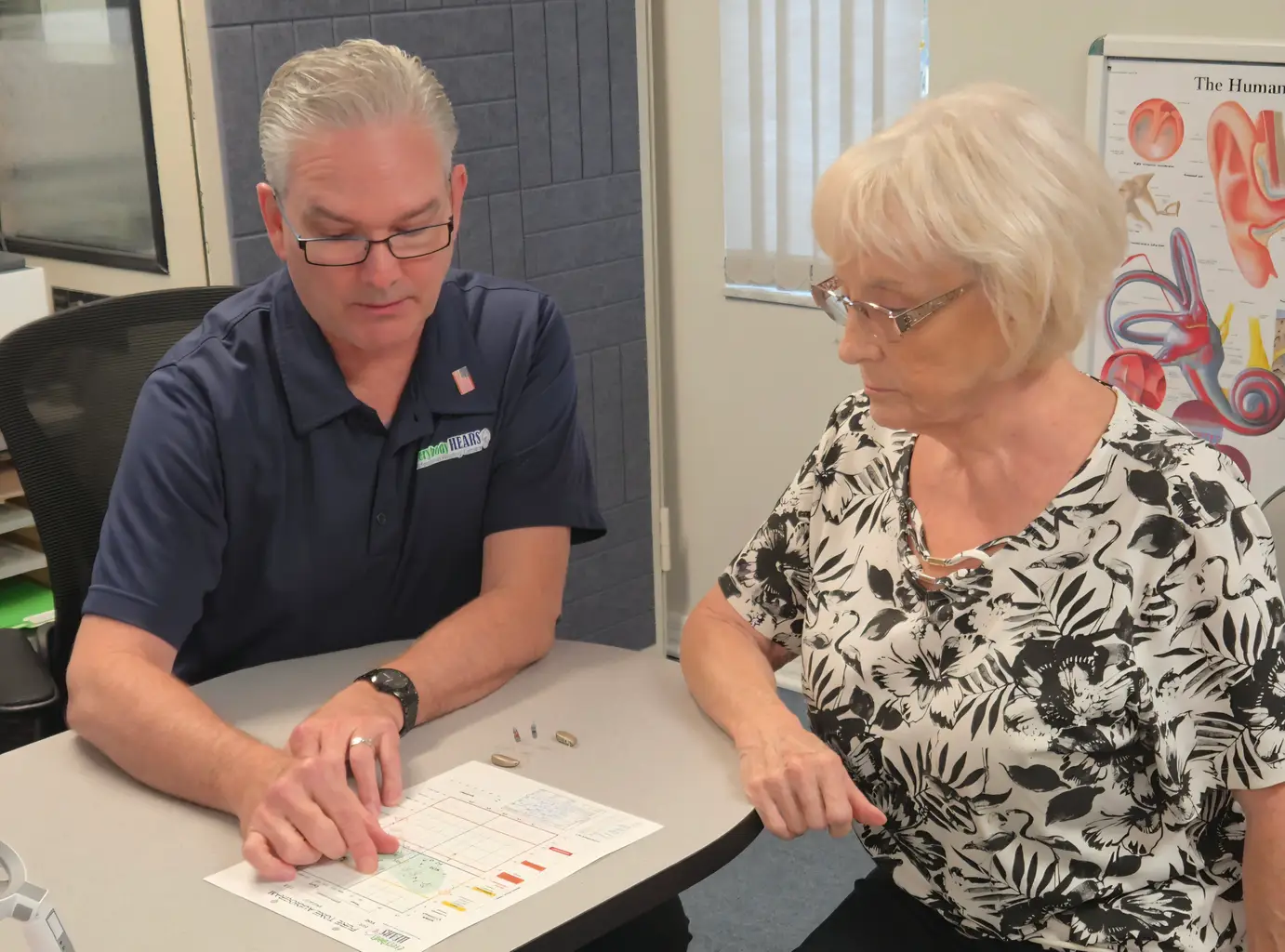
The results are recorded on an audiogram, a chart that shows the softest sounds you can hear across key frequencies. Your provider will explain that chart in plain language that is ready to understand and you can ask questions about these results. The goal is not to overwhelm you with technical terms. It is to connect the results to the moments you have described: why certain voices seem unclear, why noise makes conversation harder, or why you hear people talking but cannot always understand the words.
A hearing evaluation can also point out when medical follow-up is needed. Sudden hearing loss, one-sided changes, ear pain, drainage, persistent dizziness, or a rapid decline deserve prompt medical attention. Hearing professionals work within their scope and can help you understand when an ear, nose, and throat physician should be involved.
When a Hearing Aid May Help
Hearing aids do more than make everything louder. Properly fitted prescription devices are designed to make speech clearer while managing the sounds around you. Modern options may use directional microphones, noise reduction, feedback control, rechargeable batteries, Bluetooth connectivity, and app-based adjustments from a smartphone.
Still, technology alone is not the answer. The fitting and follow-up care are just as important. A hearing aid that looks impressive on paper may not be the right choice if it is uncomfortable, difficult to manage, or poorly matched to your daily listening environments.
Your hearing professional will help you compare options without steering you toward a single manufacturer. Major brands such as ReSound, Signia, Unitron, Widex, Starkey, Oticon, Phonak, and Rexton each offer different features and styles. The best device depends on your hearing needs, dexterity, budget, phone use, cosmetic preferences, and the situations where you want to hear better.
Price matters, too. Large retailers may advertise a low starting price but leave patients with limited choices, rushed fitting appointments, or inconvenient service. Lower cost can be worthwhile when the device and care truly fit your needs. But the lowest initial price is not always the best value if adjustments, repairs, education, and ongoing support are difficult to access later.
Ask for straightforward answers about the full cost, warranty coverage, included follow-up visits, repair options, and trial period. Florida consumers deserve time to evaluate whether a hearing solution works in their actual lives, not just in an office. A seven-day trial can help you test comfort, sound quality, phone use, television listening, restaurants, and conversations with family. Some patients may need to try different hearing aids before making a final decision.
The Adjustment Period Is Normal
Even a well-fitted hearing aid takes adjustment. If you have been missing sounds for a long time, everyday noises such as running water, footsteps, paper rustling, or your own voice can initially seem unusually noticeable. That does not mean the hearing aids are wrong. It means your brain is relearning how to process sounds it has not heard clearly.
This is why local follow-up is so valuable. Fine-tuning settings, reviewing cleaning routines, practicing insertion and removal, and talking through specific challenges can make the difference between devices that sit in a drawer and devices you wear with confidence.
A good provider will also be honest about expectations. Hearing aids can improve communication and reduce listening effort, but they do not restore natural hearing exactly as it was years ago. No device can erase every noisy environment. With appropriate technology, professional adjustments, and a little practice; however, many people find that conversations become more comfortable and social activities feel enjoyable again.
Bring Questions and Bring a Family Member
If possible, bring a spouse, adult child, friend, or another person who knows the situations where you struggle. They may remember examples you have overlooked, and they can help you compare your goals with the recommendations you receive.
Before your appointment, think about the places where hearing is hardest. Consider whether you need help with phone calls, television, restaurants, meetings, driving, or hearing a loved one with a softer voice. Also bring information about your insurance coverage if you have it. We will help explain potential insurance benefits, financing options, captioned phone access, and whether refurbished hearing aids may be a sensible fit for your circumstances.
Do not be embarrassed if you have delayed testing. Many adults wait years between noticing a problem and seeking help. The important thing is to get clear answers now. Hearing well supports independence, relationships, safety, and the simple comfort of being part of the conversation. Start with the test, ask questions, and choose care that will still be there after the fitting.